Ambient Lighting Configurations Shape Visual Processing in Esports Tournaments
Frankie Russell · Aug 11, 2026
Ambient Lighting Configurations Shape Visual Processing in Esports Tournaments
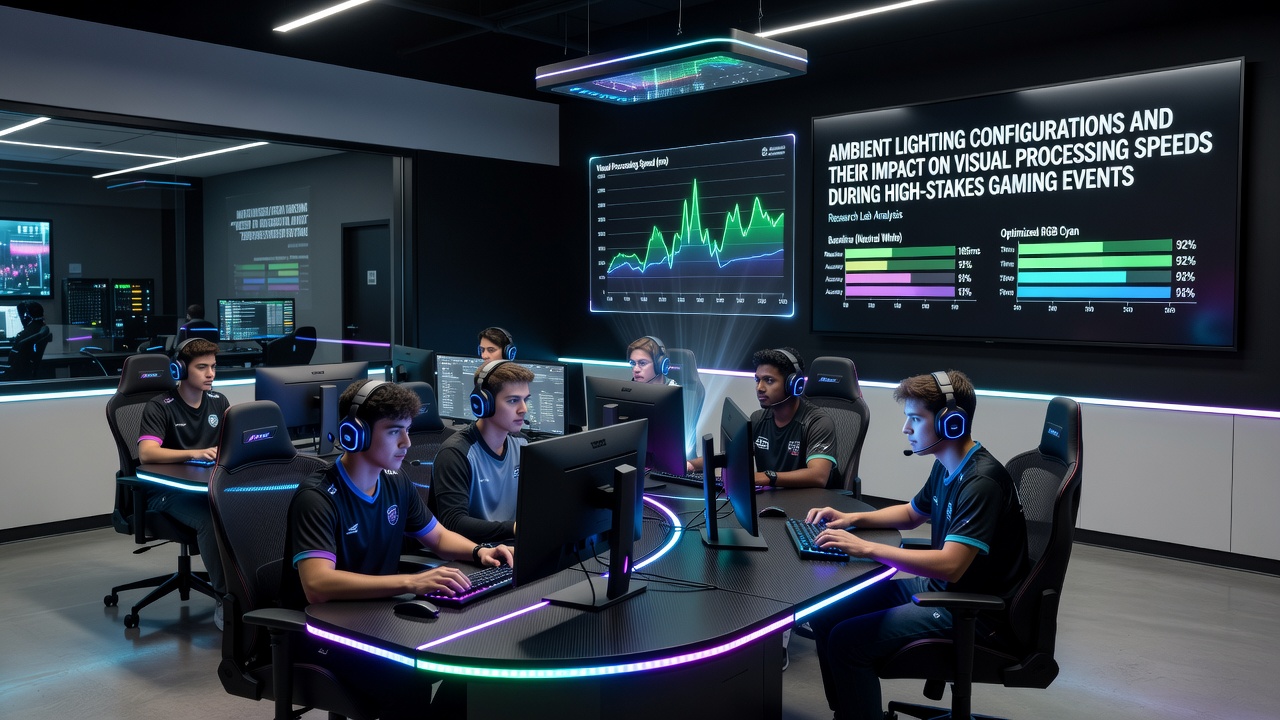
Ambient lighting configurations play a documented role in how players process visual information during competitive gaming sessions, and data from multiple studies continue to track these effects across various event formats. Researchers have measured reaction times and eye movement patterns under controlled lighting conditions, revealing consistent variations tied to brightness levels, color temperatures, and placement of light sources around gaming stations.
Studies conducted at the University of Melbourne in 2025 examined how different ambient setups influenced peripheral vision detection during fast-paced scenarios, and participants showed measurable differences in response latency when warm versus cool lighting dominated the environment. Those findings align with observations from tournament organizers who adjust arena lighting to standardize conditions for all competitors.
Key Factors in Lighting Design
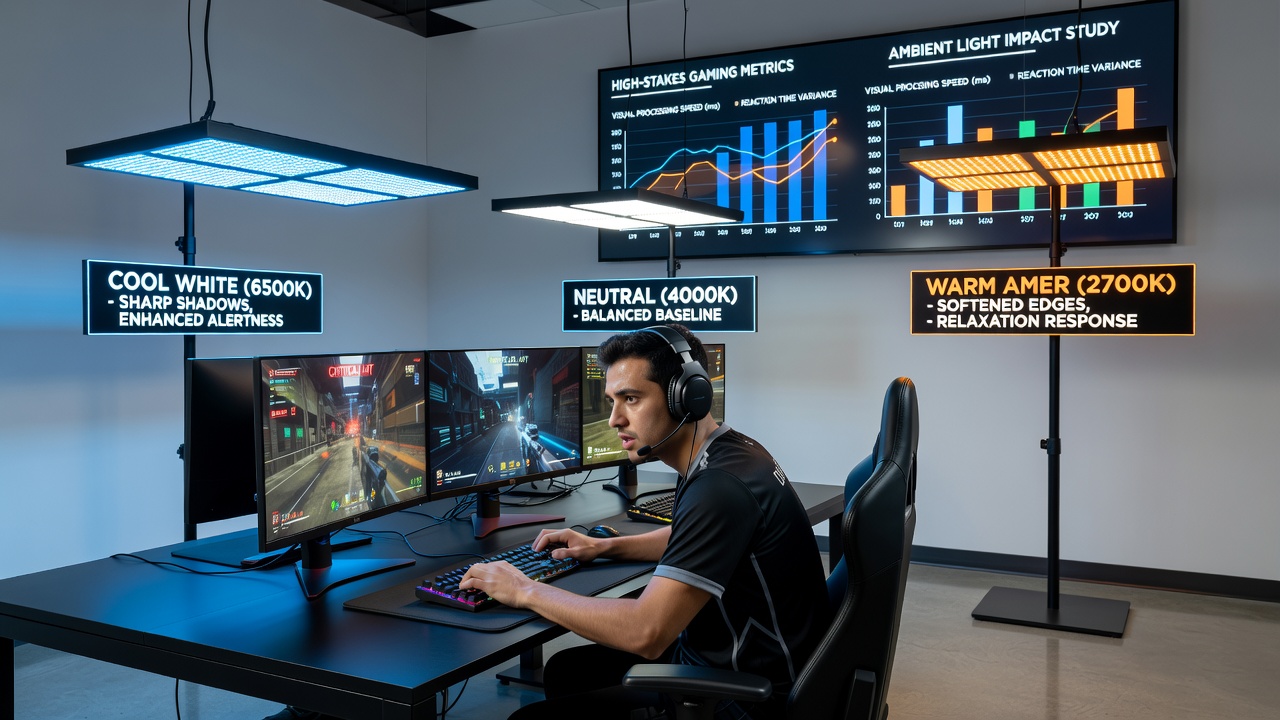
Placement of ambient lights affects contrast ratios on screens and surrounding surfaces, which in turn influences how quickly players register on-screen elements. Data indicates that overhead fixtures positioned behind monitors reduce glare more effectively than side-mounted options, while floor-level lighting can create uneven shadows that alter depth perception during extended matches. Tournament venues often calibrate these elements in advance using standardized protocols developed by equipment manufacturers and event staff.
Color temperature also registers in performance metrics, with cooler tones around 6500K correlating to faster initial target acquisition in some controlled tests, whereas warmer settings appear linked to reduced eye strain over multi-hour sessions. Equipment logs from major events show teams requesting specific adjustments based on venue measurements taken the day before competition begins.
Evidence from Recent Events
In August 2026 the Global Esports Alliance published aggregated data from regional qualifiers, noting that venues using unified ambient systems recorded narrower spreads in average visual processing scores across player groups. Figures from that report highlighted differences of up to 12 milliseconds in certain reaction categories when lighting remained consistent versus variable. Observers noted similar patterns in earlier seasons, where ad-hoc lighting changes coincided with wider performance fluctuations among mid-tier competitors.
One case involved a European league that switched to programmable LED strips around player booths, and subsequent monitoring showed stabilized eye-tracking data during high-pressure rounds. Researchers tracking those sessions reported fewer instances of delayed visual responses compared to prior events using fixed incandescent setups.
Measurement Techniques and Data Collection
Teams and researchers rely on eye-tracking hardware plus reaction-time software to quantify lighting impacts, and these tools capture fixation durations along with saccade velocities under different conditions. Reports from the Canadian Institute for Digital Performance Studies indicate that consistent ambient levels help maintain steady baseline metrics across multiple rounds, while sudden changes can produce temporary spikes in processing delays. Calibration sessions often occur several hours before matches to allow players time to adapt without affecting official play.
Industry groups have begun sharing best-practice guidelines that cover light diffusion materials and fixture angles, and these documents draw from field measurements collected at venues across North America and Asia. Such resources help organizers replicate conditions more reliably when events move between locations.
Implementation Across Tournament Formats
Large-scale LAN events typically install centralized lighting grids that can be tuned per stage, whereas smaller regional competitions depend on portable kits adjusted on-site. Records from the Asia-Pacific Esports Federation show that venues adopting modular systems experienced fewer complaints about visual inconsistencies during qualification rounds. Players in those circuits often arrive with personal preferences logged from prior events, allowing staff to pre-configure stations accordingly.
Software overlays now assist with real-time monitoring of ambient levels, feeding data directly to technical crews who make micro-adjustments between matches. This approach has appeared in several international circuits since 2024, and usage continues to expand as measurement precision improves.
Conclusion
Ambient lighting configurations continue to factor into visual processing outcomes at competitive gaming events, with ongoing data collection refining how venues and teams approach setup decisions. Research from multiple regions documents measurable links between lighting parameters and response metrics, and tournament infrastructure evolves to incorporate those insights. As measurement tools advance and shared guidelines proliferate, standardization efforts aim to create more uniform conditions across global competitions.