Battery Endurance Under Fluctuating Power Conditions in Mobile Tournament Environments
Frankie Russell · Aug 25, 2026
Battery Endurance Under Fluctuating Power Conditions in Mobile Tournament Environments
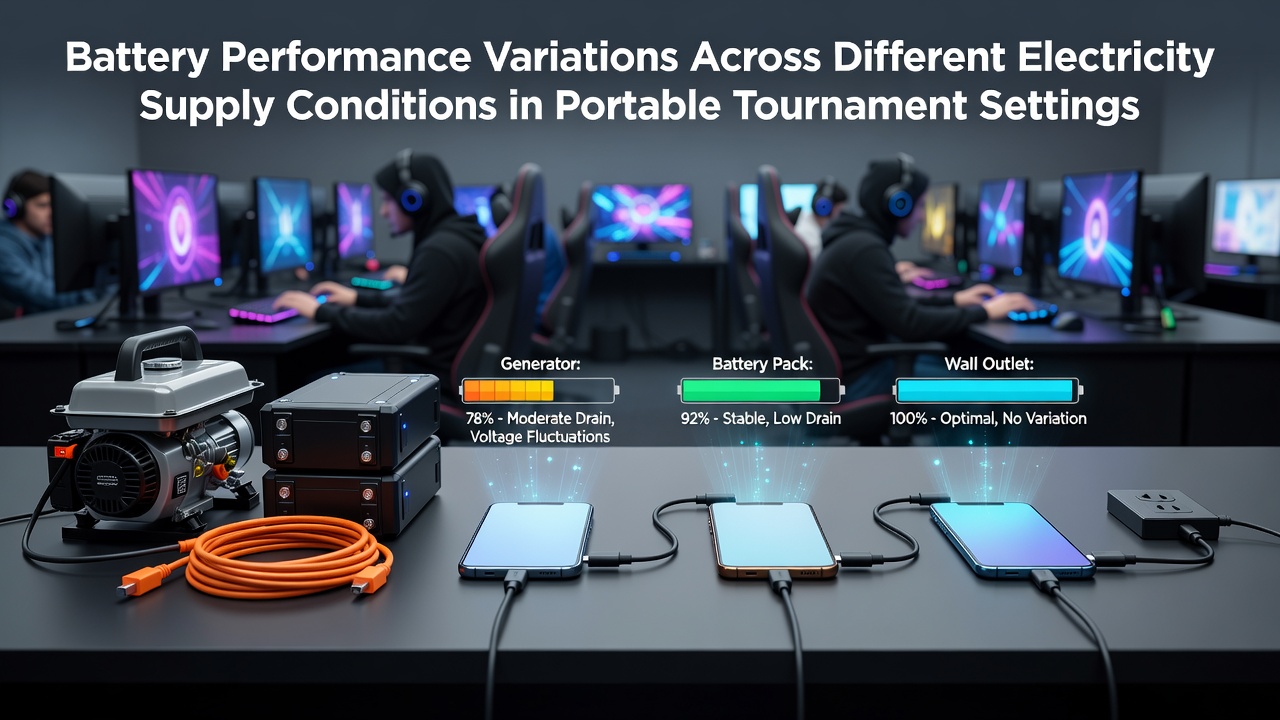
Portable tournament settings bring together competitors who rely on mobile devices and laptops for extended play sessions, yet electricity supply conditions often vary widely from venue to venue. Organizers frequently encounter differences in grid stability, generator output, and portable charging solutions, each of which alters how batteries charge, discharge, and maintain capacity over time. Data collected at events throughout 2025 and into August 2026 shows measurable shifts in runtime and thermal behavior when supply voltage fluctuates beyond standard ranges.
Studies conducted by research teams at several universities have tracked lithium-ion cells under controlled voltage deviations, revealing that sustained exposure to 110-120V versus 220-240V inputs changes internal resistance patterns. Those variations appear most pronounced when devices switch between wall adapters and external battery packs during the same session. Tournament staff who monitor power quality report that even brief drops below nominal voltage trigger protective circuits inside modern batteries, shortening overall play windows by noticeable margins.
Regional Infrastructure and Tournament Logistics
Events held in areas with aging distribution networks experience more frequent harmonic distortion and frequency drift, conditions that force device power management systems to throttle performance earlier than expected. Observers note that competitors using the same hardware model can record differing battery percentages at the end of identical match schedules simply because one venue drew power from a more stable substation while another relied on temporary generator banks. Figures from the Australian Energy Regulator indicate that generator-sourced electricity often carries wider voltage swings than grid connections, a factor tournament planners now factor into site selection checklists.
Power banks and solar-assisted chargers introduce additional variables because their output profiles rarely match the clean sine waves supplied by utility companies. Engineers who tested common models at recent qualifiers found discharge curves that steepened when ambient temperatures climbed above 30 degrees Celsius, a common occurrence in outdoor or poorly ventilated halls. These patterns become critical during multi-day brackets where players recharge between rounds without access to calibrated laboratory equipment.
Device-Level Responses to Supply Variations
Modern smartphones and gaming handhelds incorporate voltage regulation circuitry that attempts to normalize incoming power, yet efficiency losses accumulate when input deviates from design specifications. Research published by teams at technical institutes demonstrates that repeated micro-cycles of under-voltage and recovery reduce cycle life faster than steady-state charging at correct levels. Participants in August 2026 regional events reported devices entering low-power modes mid-match after overnight charging from shared generator feeds that cycled on and off irregularly.
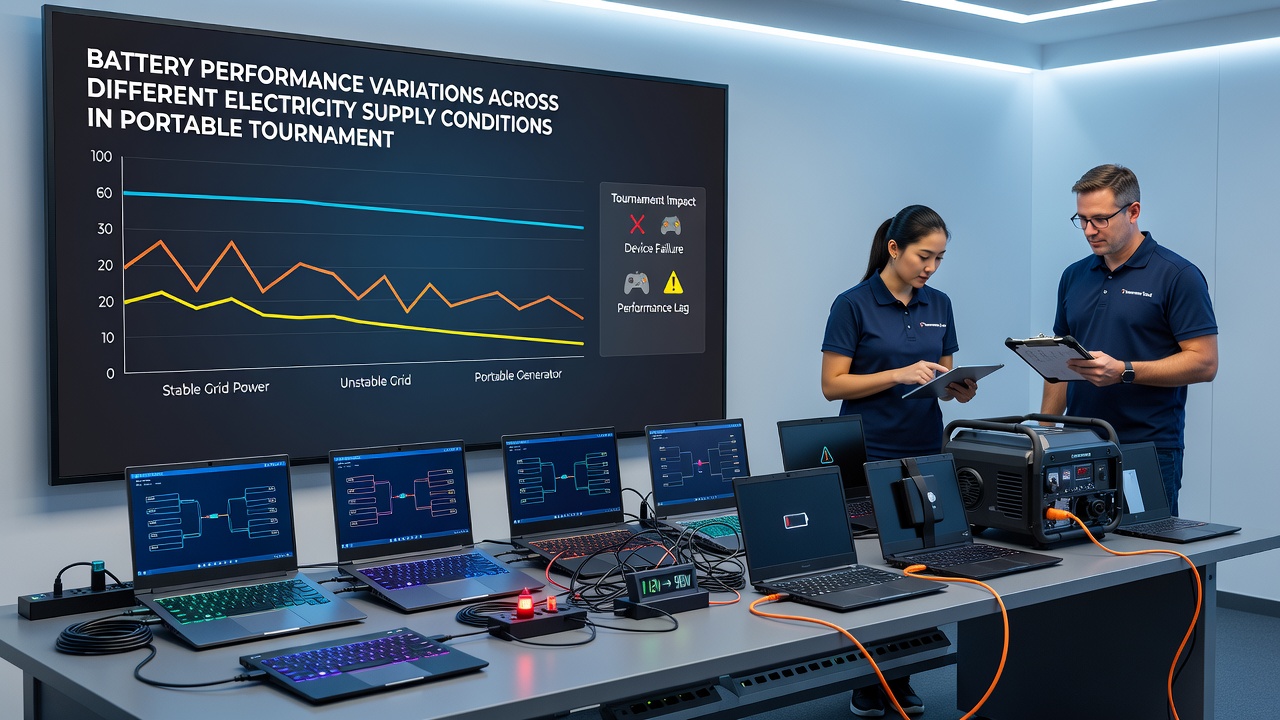
Thermal management systems inside devices respond to these conditions by increasing fan speeds or reducing clock rates, actions that indirectly affect perceived input responsiveness. Data from field measurements taken during European qualifiers revealed peak battery temperatures rising 4 to 7 degrees higher when charging occurred through extension cords running across large halls, where voltage drop became measurable. Such temperature increases accelerate electrolyte degradation, a process documented in long-term studies by institutions tracking consumer electronics reliability.
Measurement Practices and Mitigation Approaches
Tournament organizers have begun deploying portable power analyzers to log voltage, frequency, and total harmonic distortion at each charging station. These logs allow staff to predict which battery packs will reach critical thresholds before final rounds. One documented case involved a North American circuit where pre-event testing identified outlets delivering 8 percent below rated voltage; rerouting cables and adding inline conditioners extended average device uptime by nearly 40 minutes per session.
Industry groups such as the Consumer Technology Association have published guidelines recommending that portable events maintain at least two independent power paths with automatic transfer switches. When implemented, these setups reduce the duration devices spend in unstable charging states. Competitors who calibrate their power settings to match measured supply conditions often preserve higher remaining capacity percentages at the close of long play periods.
Conclusion
Battery performance in portable tournament environments reflects the combined influence of supply voltage stability, waveform quality, ambient temperature, and charging hardware characteristics. Continued collection of field data through 2026 and beyond enables organizers to anticipate runtime shortfalls and adjust infrastructure accordingly. Those who incorporate power quality monitoring into standard operating procedures consistently report fewer mid-event interruptions tied to unexpected battery depletion.