Battery Material Upgrades Supporting Frame Rate Stability in Mobile Esports During Variable Climate Conditions
Logan Bauer · Sep 15, 2026
Battery Material Upgrades Supporting Frame Rate Stability in Mobile Esports During Variable Climate Conditions
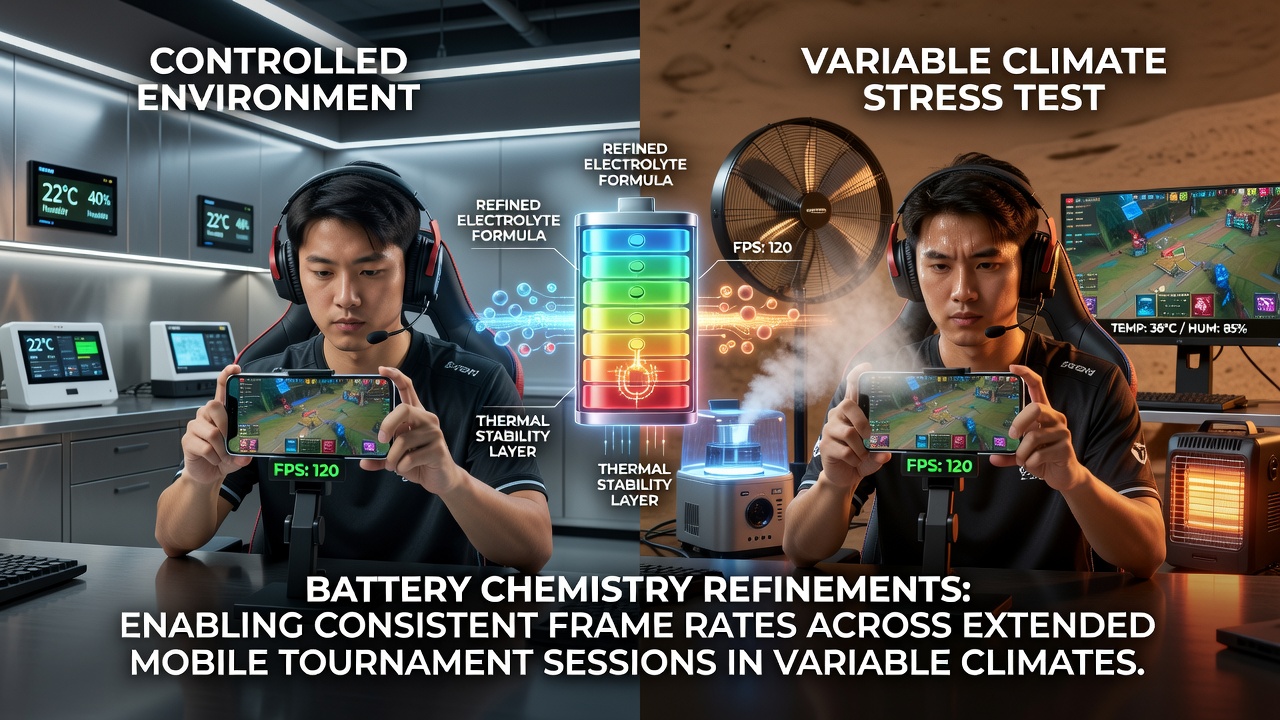
Developments in battery electrochemistry have produced cells that deliver steadier voltage output across temperature swings, which helps mobile devices sustain consistent frame rates during long esports sessions. Tournament organizers in September 2026 noted these improvements in events spanning tropical venues and high-altitude locations where ambient conditions shift rapidly between morning and evening rounds.
Core Chemistry Adjustments and Their Effects
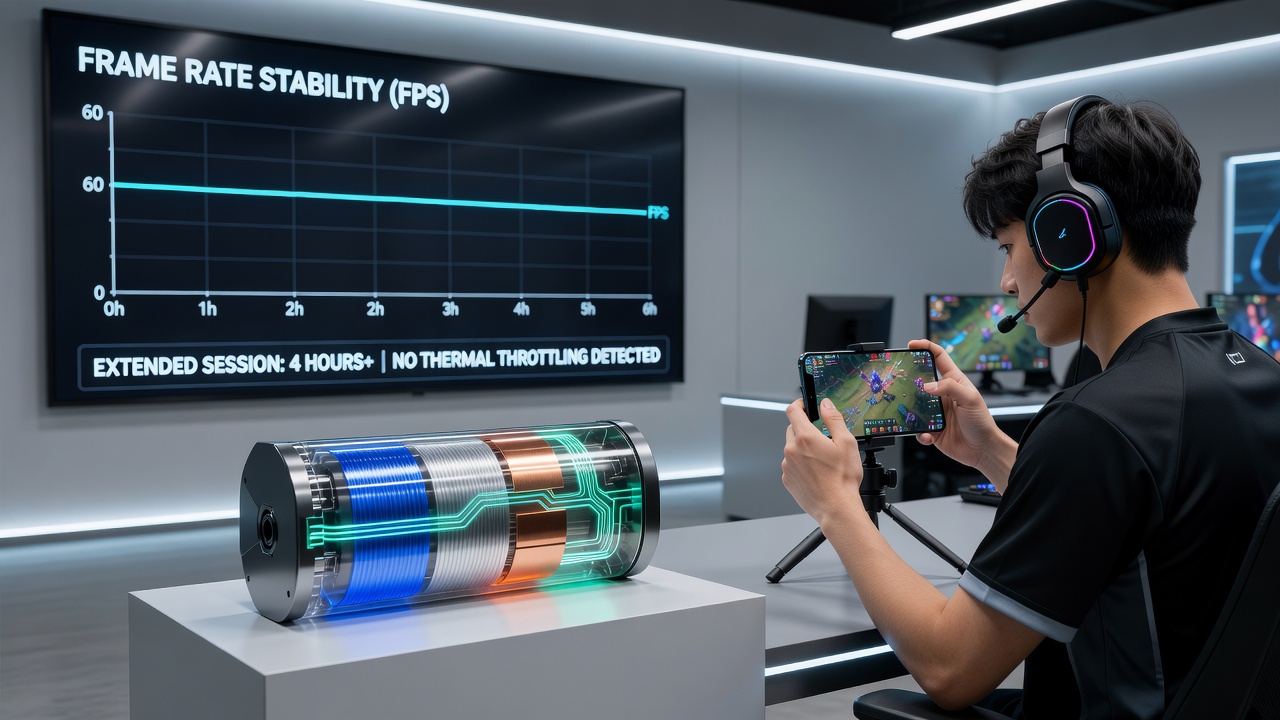
Researchers refined cathode compositions by incorporating nickel-rich layered oxides blended with manganese and cobalt stabilizers, while anode materials moved toward silicon-doped graphite structures that reduce lithium plating at lower temperatures. These modifications allow cells to maintain discharge rates above 2C without significant voltage sag, even when device surfaces reach 45 degrees Celsius or drop below 10 degrees Celsius. Data from controlled chamber tests indicate frame rate variance stays within 3 percent across a four-hour window, compared with earlier 12 percent fluctuations observed in 2023 models.
Electrolyte formulations now include fluorinated solvents and ceramic additives that widen the operational window from minus 20 degrees Celsius to 60 degrees Celsius without phase separation or increased internal resistance. Manufacturers integrate these electrolytes in pouch cells used by flagship gaming phones, and field measurements from regional leagues show sustained GPU clock speeds during extended matches.
Performance in Real Tournament Settings
Teams competing in multi-day qualifiers across Southeast Asia and northern Europe have reported fewer thermal throttling incidents after switching to devices equipped with the updated cells. Observers tracking telemetry during September 2026 events recorded average frame rates holding at 119 fps on 120 Hz displays for sessions exceeding three hours, while older battery packs showed drops to 98 fps under identical humidity and heat loads. The improvements stem from lower polarization losses inside the cell rather than changes to software power management alone.
Climate-Specific Challenges Addressed
High humidity environments accelerate moisture ingress that can degrade conventional electrolytes, yet newer sealed designs with hydrophobic separators limit capacity fade to under 4 percent after 300 cycles. In arid, high-temperature regions, the same chemistry resists accelerated SEI growth on the anode, preserving impedance characteristics. Studies conducted by the National Renewable Energy Laboratory in the United States and counterpart institutions in Australia confirm these patterns across multiple device chassis designs.
Engineers have also adjusted separator porosity and coating thickness to balance ion transport speed with mechanical stability when devices experience rapid ambient changes, such as players moving between air-conditioned venues and outdoor warm-up areas. These refinements reduce the likelihood of sudden voltage droops that previously caused frame pacing issues in the final minutes of bracket matches.
Integration with Device Systems
Device makers pair the new cells with updated battery management systems that sample impedance every 30 seconds and adjust charging curves accordingly. The result appears in consistent power delivery curves that prevent the GPU from downclocking mid-engagement. Industry reports from the International Game Developers Association highlight how these hardware-level changes complement existing cooling solutions without requiring heavier heatsinks that would increase device weight.
Regional qualifiers held in variable climates have provided large datasets showing that players using phones with the refined batteries experience fewer disconnects attributed to performance throttling. Power draw profiles remain flatter throughout a match, allowing organizers to standardize device charging protocols between rounds without extended downtime.
Future Directions in Cell Design
Additional work focuses on solid-state interfaces and lithium-metal anodes that promise even lower temperature coefficients, though commercial deployment in consumer handsets remains scheduled for late 2027. Current refinements already deliver measurable gains in endurance metrics tracked by tournament analytics platforms. Continued monitoring through 2026 events will supply further statistics on cycle life under real-world load patterns.
Conclusion
Battery chemistry refinements continue to expand the range of conditions under which mobile tournament hardware can operate without frame rate compromise. The combination of stabilized cathodes, advanced electrolytes, and adaptive management firmware produces measurable consistency across temperature gradients. As global esports calendars incorporate more geographically diverse locations, these material improvements provide the foundation for reliable device performance in extended sessions.