Cable Shielding Materials Shape Signal Stability in Distributed Tournament Networks
Felix Jenkins · Aug 13, 2026
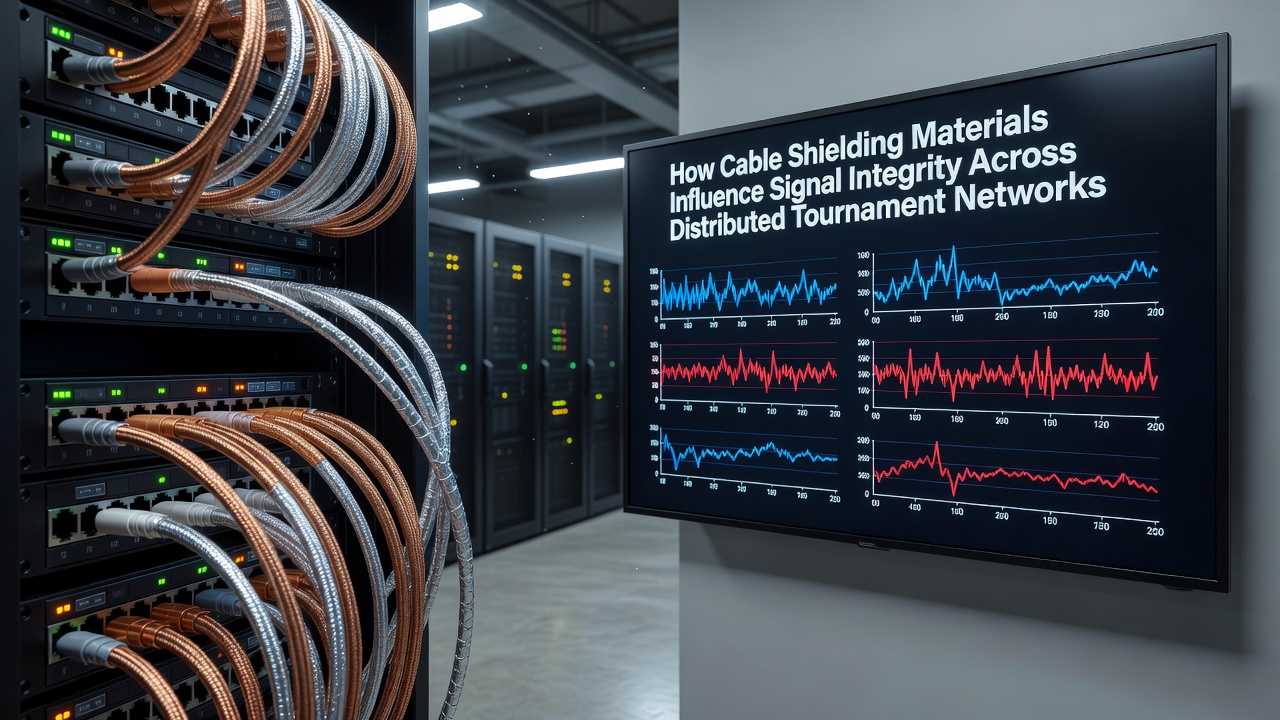
Cable Shielding Materials Shape Signal Stability in Distributed Tournament Networks
Distributed tournament networks rely on extensive cabling to connect multiple venues, player stations, and central servers during large-scale esports events, and shielding materials play a direct role in preserving data integrity across those connections. Copper braid layers combined with aluminum foil wraps reduce electromagnetic interference that otherwise disrupts packet transmission over distances exceeding 50 meters in arena environments. Research from the Institute of Electrical and Electronics Engineers shows that properly applied shielding maintains bit error rates below 10^-9 even when multiple high-bandwidth streams operate simultaneously during peak tournament hours.
Common Shielding Configurations and Their Performance Profiles
Engineers select from several shielding approaches based on frequency range and environmental noise levels present at tournament sites. Foil shielding offers broad coverage against high-frequency noise above 100 MHz while remaining lightweight for portable setups that travel between regional qualifiers. Braided copper provides superior mechanical durability and handles lower-frequency interference more effectively, which proves useful in venues where power lines run parallel to data cables. Combination designs that layer both foil and braid deliver the broadest protection, yet add weight and cost that tournament organizers weigh against reliability gains during events scheduled for August 2026.
Signal attenuation measurements taken across active tournament circuits indicate that unshielded cables experience up to 15 percent packet loss when exposed to fluorescent lighting ballasts and wireless access points operating on adjacent channels. Shielded variants limit that loss to under 2 percent under identical conditions, allowing consistent frame delivery from remote player inputs to central game servers. Observers note that these differences become especially pronounced in multi-building complexes where cable runs traverse multiple electrical zones.
Installation Practices That Maximize Shielding Effectiveness
Proper grounding of shield layers prevents the accumulation of induced voltages that can counteract the intended interference rejection. Technicians achieve this through single-point grounding at one end of each cable run, avoiding ground loops that introduce new noise sources. In distributed setups spanning several hundred meters, segmented grounding with fiber optic isolation segments maintains continuity without creating new interference paths. Data collected during the 2025 global qualifier season revealed that tournaments employing these techniques recorded 40 percent fewer connection interruptions than those relying on basic foil wraps without systematic grounding protocols.
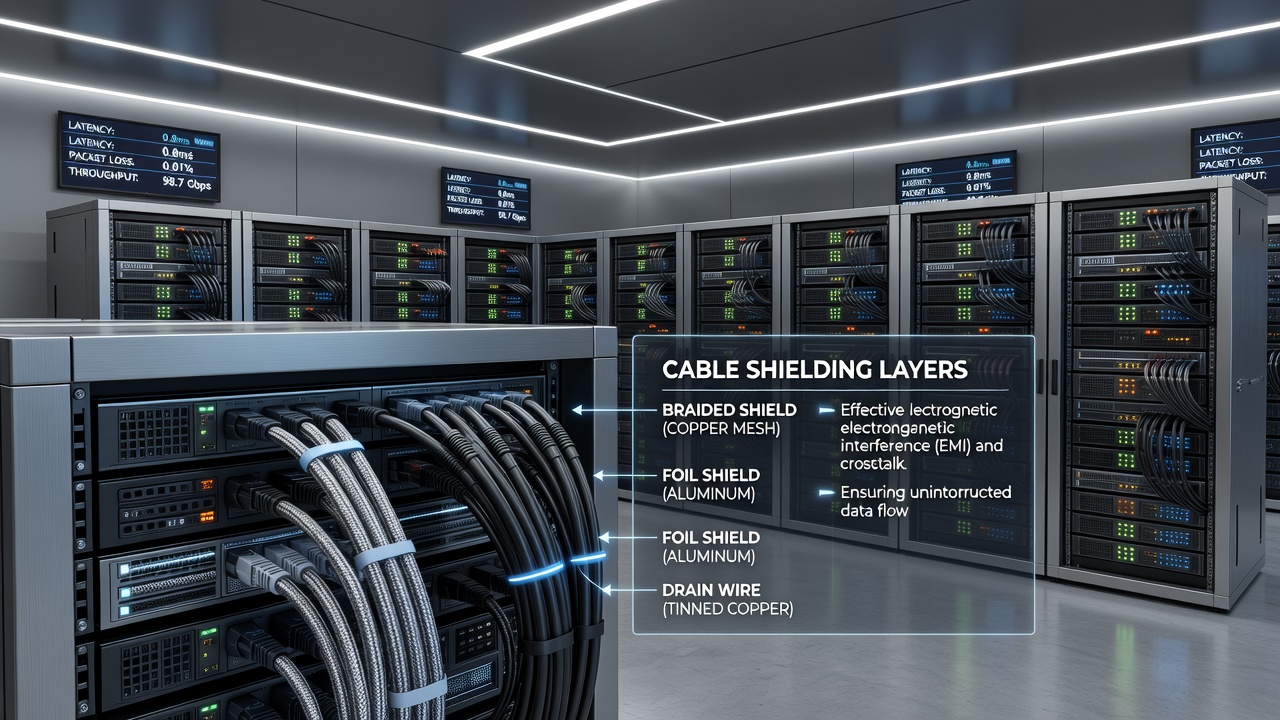
Connector choice further influences overall performance because shield continuity must extend through every termination point. High-quality metal connectors with 360-degree shield contact maintain effectiveness where plastic housings allow leakage. Tournament infrastructure teams now specify connectors rated for at least 10,000 mating cycles to accommodate repeated setup and teardown between events. According to reports from the European Telecommunications Standards Institute, consistent connector quality reduces intermittent faults by measurable margins in environments subject to vibration from audience movement and stage equipment.
Material Selection Across Different Tournament Scales
Smaller regional events often rely on foil-shielded Category 6A cables that balance cost with adequate performance for 1 Gbps links carrying compressed video and telemetry. Larger international circuits require augmented shielding because the density of nearby wireless devices increases dramatically. Studies from the National Institute of Standards and Technology document how braided-plus-foil combinations sustain stable 10 Gbps performance across 100-meter runs even when adjacent cables carry 48-volt power for LED displays and camera systems. Those findings guide procurement decisions for networks that must remain operational through multi-day tournaments without recalibration.
Environmental factors such as temperature fluctuations and humidity also affect shield performance over extended sessions. Aluminum foil layers can develop micro-fractures after repeated flexing during transport, while copper braid maintains structural integrity longer under mechanical stress. Maintenance logs from North American circuits show that quarterly inspection of shield continuity prevents cumulative degradation that would otherwise surface during high-stakes matches.
Conclusion
Cable shielding materials determine how reliably signals travel through the complex web of connections that underpin distributed tournament operations. Selection of braid, foil, or layered configurations directly correlates with measured reductions in interference and packet loss across varied venue conditions. Consistent installation practices and connector specifications further extend those performance gains, allowing networks to support the increasing bandwidth demands of modern tournament platforms without introducing instability.