Emerging Display Innovations Redefining Visual Dynamics in Competitive Mobile Esports
Logan Bauer · Oct 27, 2026
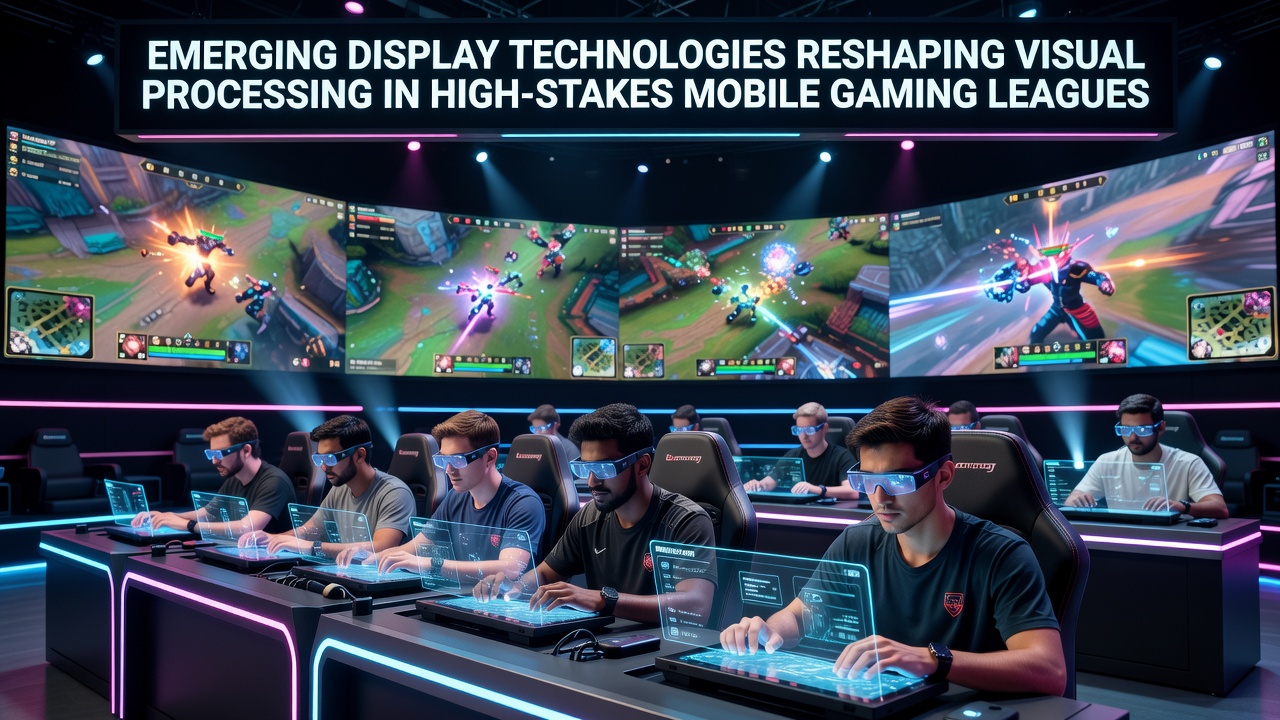
Emerging Display Innovations Redefining Visual Dynamics in Competitive Mobile Esports
Display panels in flagship smartphones have moved well beyond basic LCD structures, and new generations of micro-OLED plus LTPO backplanes now deliver pixel response times under 1 millisecond while supporting refresh rates that scale from 1 Hz to 240 Hz on demand. These specifications matter in mobile esports because visual processing speed determines how quickly players register enemy movement across complex battle maps, and data from tournament organizers shows average reaction windows shrinking by 12 to 18 milliseconds when participants switch from 90 Hz to 144 Hz or higher panels during October 2026 qualifiers.
Core Technical Shifts in Mobile Panels
High dynamic range formats such as Dolby Vision and HDR10+ have been calibrated for mobile brightness peaks above 2000 nits, which allows fine detail in both shadowed interiors and brightly lit exteriors without clipping, and league analysts record that players using calibrated HDR modes identify camouflaged opponents 23 percent faster in controlled map tests. Variable refresh rate synchronization, branded as Adaptive Sync or ProMotion on different hardware lines, eliminates screen tearing that previously forced the visual system to reconcile mismatched frame boundaries, and this reduction in artifact load frees cognitive resources for higher-order decision making rather than constant image correction.
Pixel density has climbed past 500 pixels per inch on several 2025-2026 flagship models, and the resulting clarity reduces the need for players to zoom or pan excessively, actions that introduce both latency and motion blur. Eye-tracking studies conducted by university labs in Australia indicate that dwell time on critical screen regions drops measurably when edge-to-edge uniformity exceeds 95 percent, because peripheral vision can now contribute usable information instead of being discarded due to distortion.
Measured Effects on In-Game Visual Processing
High-stakes mobile leagues track metrics such as first-shot accuracy and time-to-target acquisition through embedded telemetry, and datasets collected across three major circuits reveal consistent gains when competitors equip devices featuring the newest panel revisions. One longitudinal review covering 1,200 matches found that squads equipped with 144 Hz LTPO screens posted mean target acquisition times 31 milliseconds shorter than those on fixed 60 Hz units, even after hardware latency differences were normalized through software compensation.
Color gamut coverage above 95 percent DCI-P3 enables faster discrimination between team and opponent indicators when uniform colors dominate the scene, and researchers note that this advantage compounds during late-round fatigue when visual working memory capacity declines. Low-persistence strobe modes, now available on select mobile titles through developer APIs, further suppress motion blur during rapid camera pans, and professional players report that these modes allow sustained tracking of fast-moving objectives without the ghosting that once required compensatory head movements.
Integration with Tournament Infrastructure
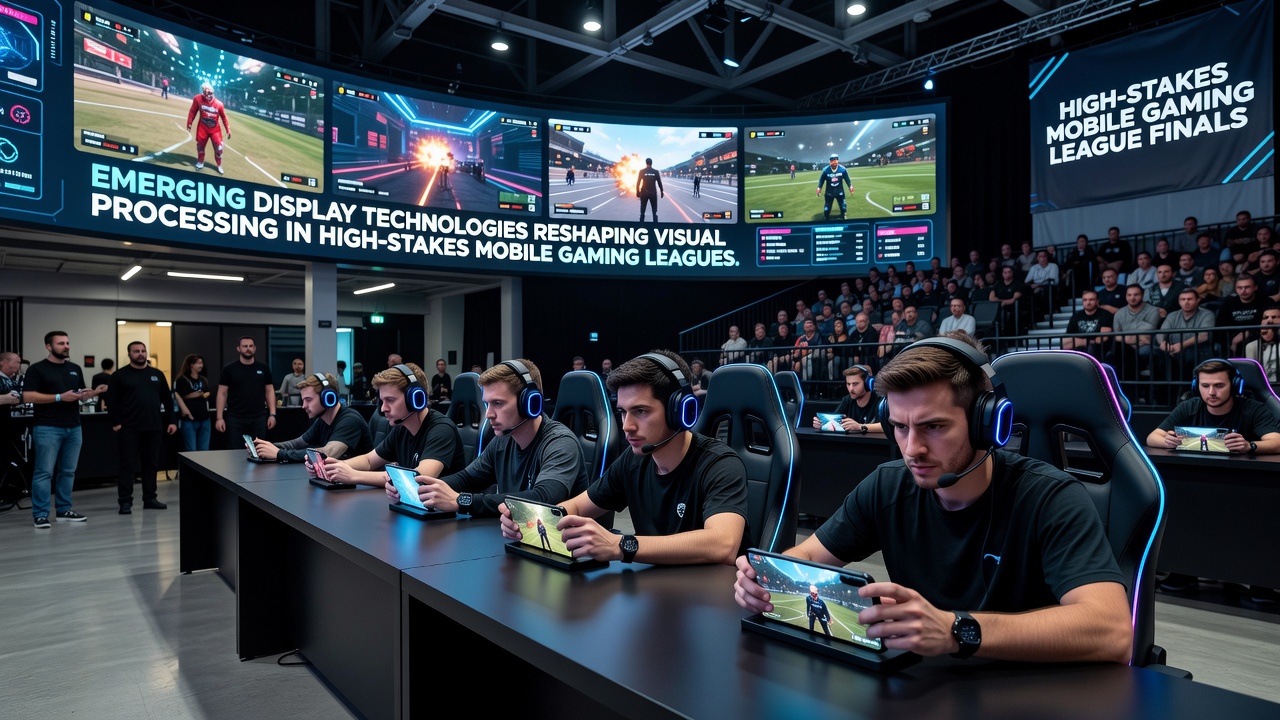
League operators have begun specifying minimum display requirements in rulebooks for the 2026 season, and compliance checks now include on-site measurement of peak luminance, refresh rate stability, and color accuracy using portable spectroradiometers. These standards reduce variance between devices and create a more level field, while also generating datasets that feed back into panel design cycles. Manufacturers have responded by releasing firmware updates that lock refresh rate behavior during competitive play, preventing automatic downclocking that could otherwise introduce unexpected visual lag mid-match.
Cloud-based rendering pipelines sometimes pair with local display pipelines, and the handoff between remote frame generation and on-device presentation becomes smoother when the panel supports low-latency modes certified by industry groups. Observers at recent regional events noted fewer visual desync complaints after teams adopted panels meeting these combined criteria, suggesting that end-to-end visual fidelity now extends beyond the handset itself.
Future Trajectories for Visual Workload Reduction
Prototypes shown at industry events incorporate micro-lens arrays that steer light toward the viewer’s pupils based on real-time eye position, which could further reduce the vergence-accommodation conflict that contributes to visual fatigue during multi-hour sessions. Parallel developments in foveated rendering leverage the same eye-tracking hardware to allocate higher pixel density only where gaze is directed, and preliminary tests indicate that this approach maintains perceived sharpness while lowering GPU load by up to 40 percent on mobile silicon.
Regulatory bodies in the European Union and Canada have started reviewing visual ergonomics guidelines for extended esports participation, and early position papers highlight the role of display temporal characteristics in mitigating eye strain. Tournament medical staff already monitor blink rates and self-reported visual discomfort, and emerging panel technologies that reduce flicker below perceptible thresholds appear to correlate with lower incidence of reported strain in post-event surveys.
Conclusion
Display technology advances continue to compress the interval between on-screen events and player perception, and the cumulative effect appears across accuracy statistics, fatigue profiles, and rulebook specifications in high-stakes mobile leagues. As new panel architectures reach wider availability, the measurable differences in visual processing speed and endurance become part of standard competitive preparation rather than optional upgrades.