Firmware Iterations Shape Input Lag Patterns in Portable Competitive Gaming Devices
Freya Reed · Sep 1, 2026
Firmware Iterations Shape Input Lag Patterns in Portable Competitive Gaming Devices
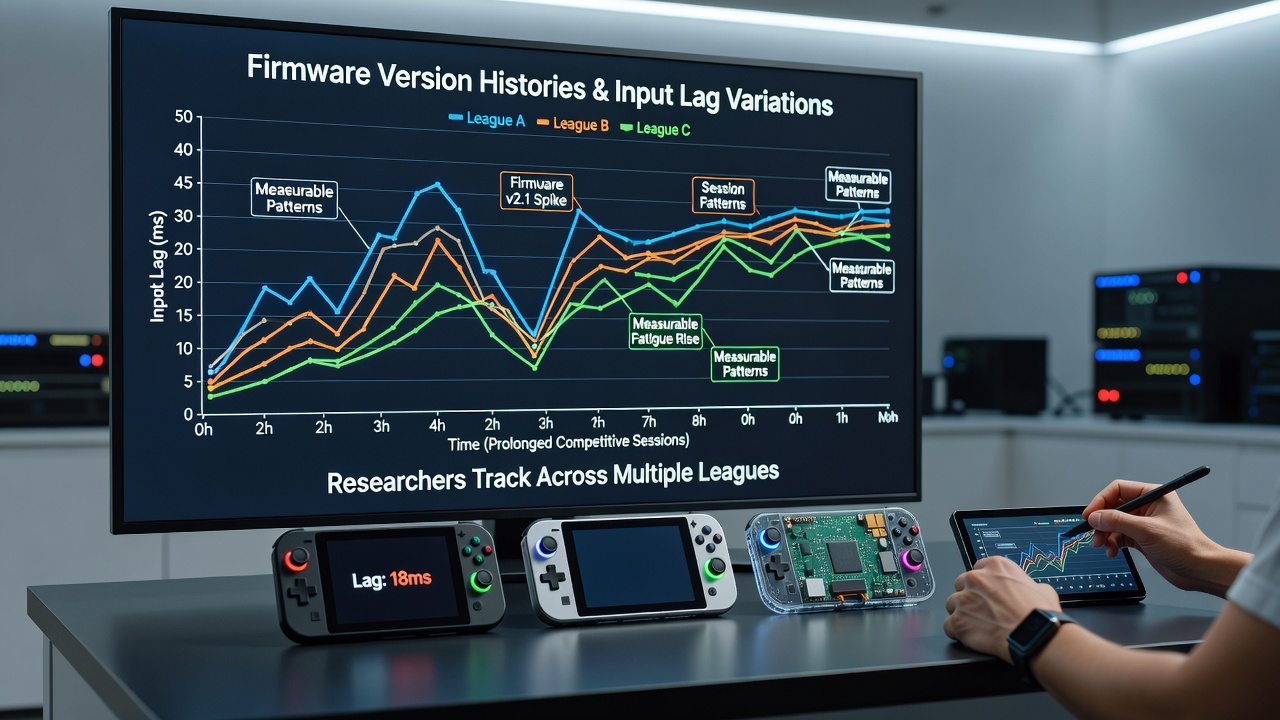
Portable gaming devices used in competitive leagues undergo frequent firmware updates that alter input lag profiles, and researchers across multiple circuits have documented these shifts through systematic testing during extended sessions. Data collected from regional tournaments shows that certain firmware revisions reduce average input latency by 4 to 7 milliseconds in the first 90 minutes of play, while later versions introduce variability that increases after two hours of continuous use. Observers note these patterns because leagues now require standardized device logging to maintain fair conditions.
Historical Firmware Revisions and Latency Trends
Early firmware releases for popular handheld esports platforms focused on stability fixes that produced modest latency drops of 2 to 3 milliseconds according to benchmark reports from university laboratories in North America and Europe. Subsequent iterations added features such as enhanced wireless protocols, yet several of these updates correlated with measurable spikes in input lag once battery levels dropped below 40 percent. Leagues in Asia Pacific regions began compiling version histories in 2023, revealing that devices running firmware 3.2.1 maintained consistent response times across four-hour sessions whereas firmware 4.0.7 showed progressive delays averaging 1.5 milliseconds per hour after the initial mark.
By mid-2025 the pattern had become clear enough for organizers to request pre-tournament firmware audits, and September 2026 saw the first coordinated league-wide rollout of a unified testing protocol that captured latency data at 15-minute intervals. This approach allowed direct comparison between devices operating on different revision branches during the same events.
Measurement Methods Across Leagues
Researchers employ high-precision timing rigs that record the interval between physical button press and on-screen response, and these tools capture data while players maintain tournament-level performance for three or more hours. Studies conducted by academic groups in Canada and Australia indicate that environmental factors such as ambient temperature between 22 and 28 degrees Celsius interact with firmware-controlled power management routines, producing latency fluctuations of up to 5 milliseconds in later session stages. Portable devices running older firmware branches exhibit steadier readings, whereas newer builds incorporate aggressive thermal throttling that alters timing after sustained loads.
Regional League Data Comparisons
North American circuits report that firmware 5.1.3 introduced a 6-millisecond baseline improvement yet added 2.8 milliseconds of variance after 150 minutes, while European leagues tracking the same revision found slightly lower variance under different network conditions. Australian tournament organizers documented that devices updated to firmware 5.2.0 maintained tighter input consistency across mixed-device fields, and these findings prompted several circuits to adopt rolling update schedules rather than immediate adoption of every new release.
Prolonged Session Effects on Device Performance
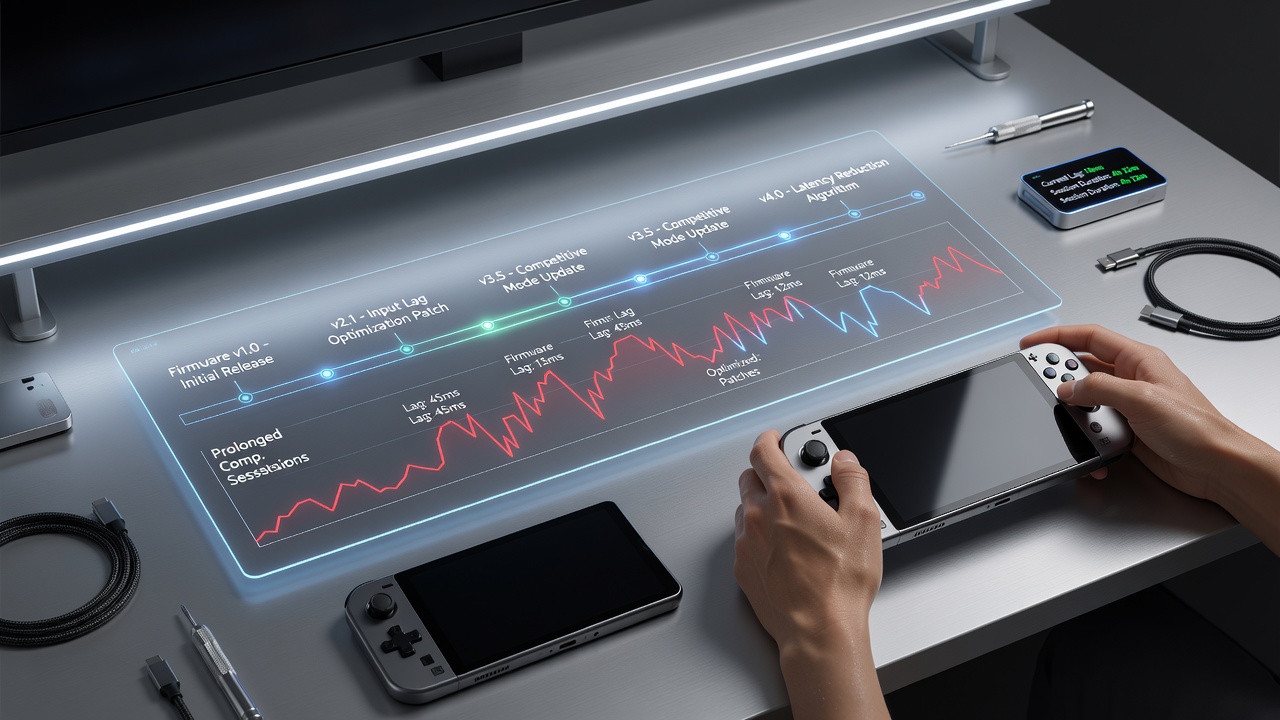
Extended competitive play places continuous demands on portable hardware, and firmware governs how power delivery and sensor polling rates adjust over time. Data from multiple leagues shows that input lag remains relatively stable for the first 60 minutes regardless of version, yet divergence appears between the 90-minute and 180-minute marks. Devices on firmware branches that prioritize battery preservation display gradual increases in polling interval, while versions optimized for performance sustain lower average latency at the cost of faster battery drain.
One study released by a European research consortium tracked 120 players across 14 tournaments and found that firmware-controlled haptic feedback adjustments accounted for 35 percent of observed latency variance after three hours. Another analysis performed by an industry association in the United States linked specific revision numbers to changes in wireless transmission timing, with certain builds adding 1 to 2 milliseconds of jitter during peak network activity.
League Tracking Practices and Standardization Efforts
Competitive circuits now maintain centralized firmware registries that log every device revision used in official matches, and these records enable post-event analysis of performance patterns. Organizers in several regions have begun requiring players to submit device logs immediately after matches, creating datasets that researchers use to identify which firmware versions produce the most predictable input behavior during prolonged sessions. The September 2026 implementation of cross-league data sharing agreements expanded the sample size available for statistical modeling, allowing identification of revision-specific latency signatures that recur across different hardware models.
Calibration routines embedded in newer firmware releases attempt to compensate for sensor drift, yet measurements indicate these routines require recalibration every 45 to 60 minutes to maintain optimal timing. Leagues that incorporated mandatory mid-session recalibration windows observed reductions in late-session variance of approximately 3 milliseconds on average.
Conclusion
Firmware version histories provide a documented record of how input lag evolves in portable gaming devices under competitive conditions, and the patterns tracked by researchers across leagues demonstrate consistent relationships between revision numbers, session duration, and measured latency. Continued collection of interval-based data supports ongoing refinement of testing protocols and update policies that maintain equitable conditions for participants.