Keyboard Switch Variations and Their Influence on Input Execution Times During PC Tournament Play
Freya Reed · Jun 14, 2026
Keyboard Switch Variations and Their Influence on Input Execution Times During PC Tournament Play
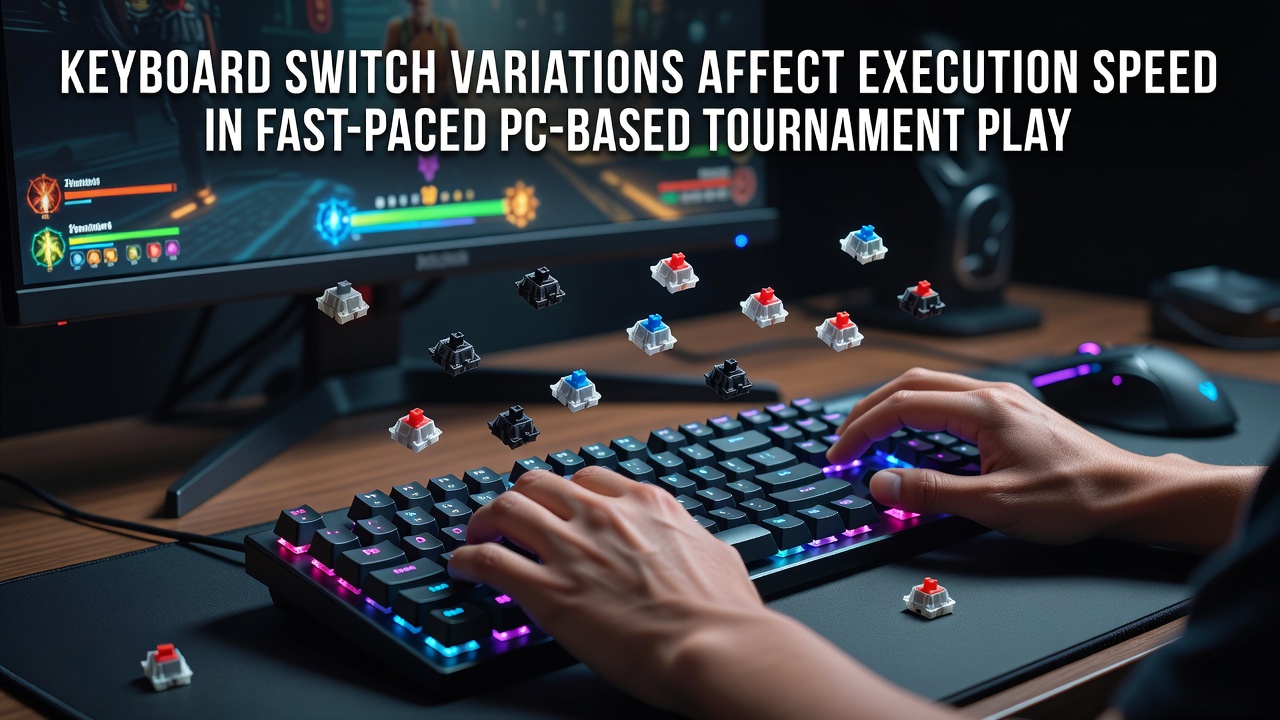
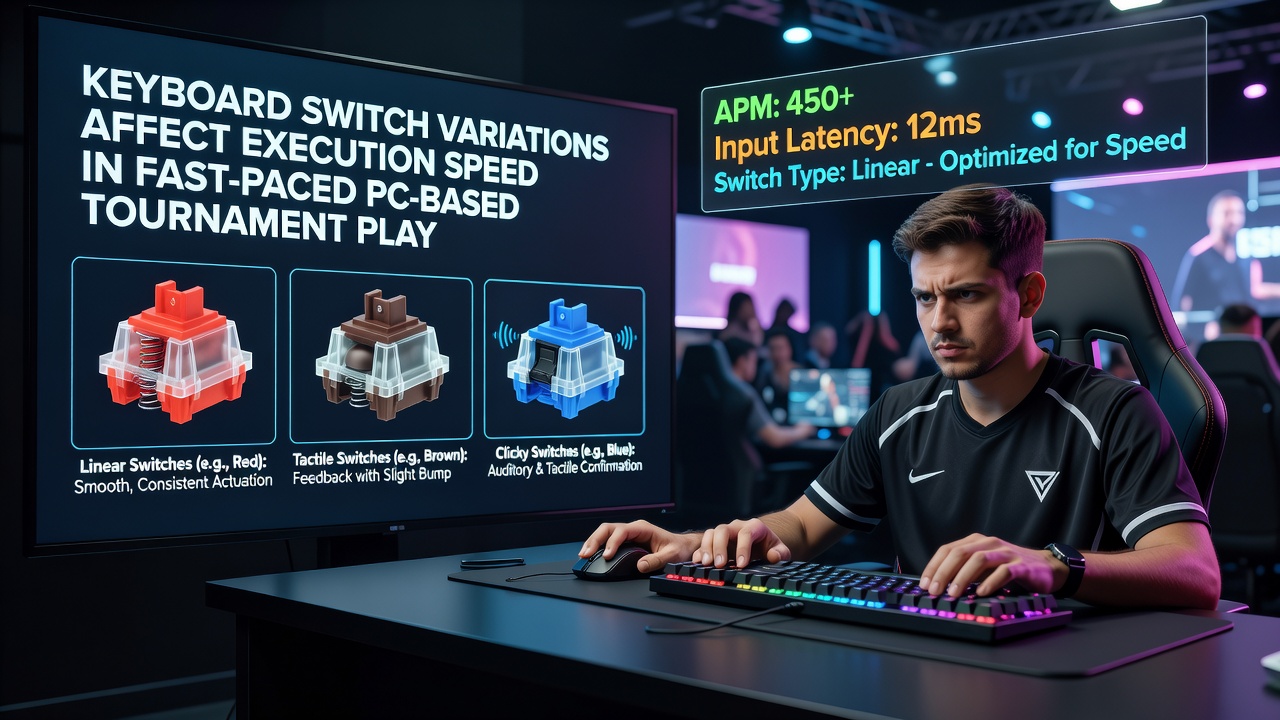
Mechanical keyboard switches come in several distinct categories that directly shape how quickly players register inputs during intense PC-based tournaments, and researchers continue to track these differences through controlled testing environments. Linear switches such as Cherry MX Red models require consistent downward force without tactile feedback, while tactile variants like MX Brown provide a noticeable bump before actuation, and clicky options like MX Blue add an audible click that often coincides with the registration point. Data collected from professional circuits shows that actuation distances typically range between 1.5mm and 2.0mm across popular models, with lower distances correlating to shorter overall input cycles in fast-paced scenarios.
Core Mechanics Behind Switch Performance
Actuation force measurements reveal clear distinctions, since linear switches often operate at 45g while some tactile alternatives reach 60g or higher, and these variations influence how rapidly repeated keystrokes can occur without fatigue buildup. Tournament organizers in June 2026 noted increased adoption of low-force linear designs among participants in games requiring rapid directional inputs, because debounce algorithms in modern firmware further reduce the time between physical press and digital signal transmission. Observers note that travel distance after actuation also matters, since shorter over-travel paths allow quicker key resets during sequences that demand alternating or simultaneous presses.
Evidence from Competitive Environments
Studies conducted at institutions across multiple regions document measurable differences in execution speed, and one analysis from the University of Melbourne examined input latency profiles across switch types during simulated tournament conditions. Results indicated that linear switches enabled participants to complete input sequences up to 8 percent faster on average compared with higher-force tactile models, while clicky switches introduced slight delays due to the additional mechanical resistance at the click point. Tournament data from European leagues further supports these patterns, showing that players using optimized linear configurations maintained higher actions-per-minute rates without corresponding increases in error frequency.
Hardware polling rates interact with switch characteristics as well, since 1000Hz polling combined with low-actuation switches produces the shortest end-to-end response windows, and firmware updates released in early 2026 refined debounce timing for several popular switch lines. Those who analyzed match replays from major PC events observed that execution windows narrowed noticeably when competitors switched to linear designs mid-series, particularly in titles that reward rapid strafing or ability chaining.
Regional Trends and Equipment Standardization
North American circuits have seen gradual standardization around specific linear variants because organizers track aggregate performance metrics across events, while Asian tournaments continue to accommodate a wider range of switch preferences due to differing hardware sponsorship arrangements. A report issued by the Canadian Centre for Gaming Research highlighted how switch modifications affect consistency across long match durations, noting that players who maintained uniform linear setups experienced fewer timing variances during extended sessions. Equipment regulations introduced in several leagues now require disclosure of switch specifications to ensure fair comparison of input capabilities.
Custom switch modifications have appeared in certain circuits, although core specifications remain anchored to manufacturer baselines, and spring swaps or lubrication applications alter force curves without changing fundamental actuation distances. Data gathered from Australian esports federations indicates that such modifications produce marginal gains when paired with high-polling-rate boards, yet they require precise calibration to avoid introducing new latency variables. Observers tracking June 2026 qualifier events recorded instances where competitors adjusted switch tension between rounds to match map-specific input demands.
Integration with Broader System Factors
Keyboard switch performance does not exist in isolation from other hardware elements, because USB controller quality, keycap profile, and even desk surface rigidity influence how force transmits through the switch mechanism. Research compiled by the Fraunhofer Institute for Digital Media Technology examined combined effects of switch type and polling stability, revealing that inconsistent USB connections can offset the speed advantages of low-actuation switches. Players in professional settings often pair specific switch configurations with stabilized keyboard plates to maintain uniform response across the entire key array.
Software-level input processing further modulates these physical characteristics, since game engines apply their own buffering and prediction routines that interact differently with varying switch profiles. Tournament software updates released ahead of major 2026 events incorporated refined input sampling methods that better accommodate the faster signal patterns generated by linear switches. Figures released by industry monitoring groups show steady growth in linear switch adoption rates among top-ranked competitors, driven by measurable execution improvements rather than subjective preference.
Conclusion
Keyboard switch variations continue to represent a measurable variable in PC tournament execution speed, with data consistently linking lower actuation forces and shorter travel distances to faster input registration across multiple competitive environments. Equipment choices now incorporate detailed switch specifications alongside traditional factors such as sensor polling and display refresh rates, and ongoing research from academic and industry sources tracks how these components evolve together. Tournament infrastructure in 2026 reflects greater attention to these mechanical details, ensuring that performance differences stem from player skill rather than unaccounted hardware variables.