Machine Learning Algorithms Transform Competitor Matching in Esports and Online Tournaments
Freya Reed · May 19, 2026
Machine Learning Algorithms Transform Competitor Matching in Esports and Online Tournaments
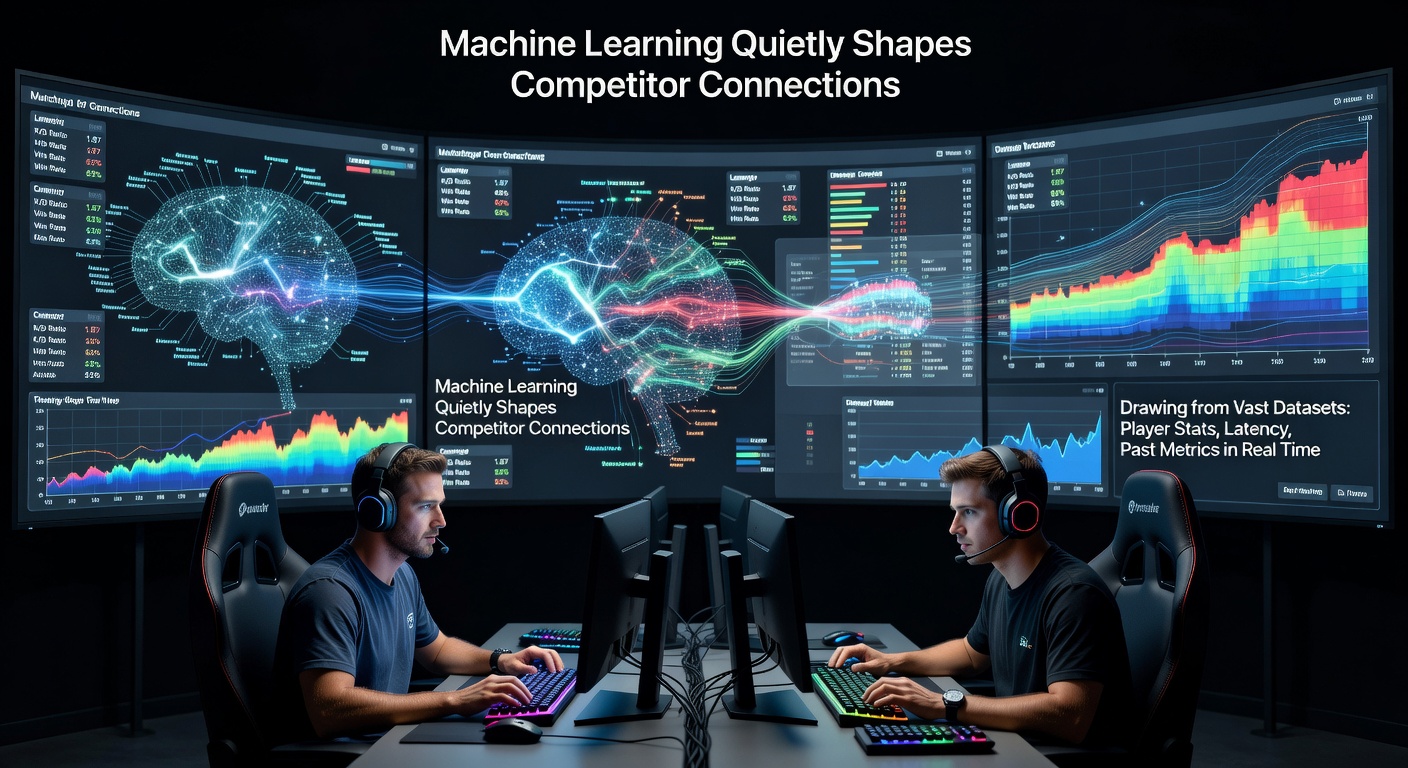
Machine learning systems now drive the core matchmaking processes in competitive online gaming, where algorithms sift through enormous collections of player statistics, latency measurements, and historical performance records to form balanced teams and matches in real time. These tools operate across major multiplayer titles and established esports circuits, adjusting pairings dynamically as new data arrives from ongoing sessions.
Developers integrate supervised learning models that classify players by skill tiers while factoring in network conditions such as ping times and regional server loads. Unsupervised techniques cluster participants based on play styles and response patterns, which helps prevent mismatches that arise when raw skill ratings alone guide selections. Reinforcement learning components further refine these outcomes by evaluating post-match results and updating prediction weights for future connections.
Data Inputs Fueling Real-Time Adjustments
Player statistics form the foundation, encompassing metrics like kill-death ratios, accuracy percentages, and objective completion rates drawn from thousands of prior games. Latency patterns add another layer, as models monitor connection stability across different geographic zones and time periods to route players toward low-delay servers. Past performance metrics track streaks, consistency under pressure, and adaptation to specific game modes, allowing the system to predict how individuals might perform in upcoming encounters.
During peak tournament hours these datasets expand rapidly, with systems processing millions of data points per minute to maintain queue integrity. Observers note that this continuous influx enables algorithms to detect emerging trends, such as shifts in meta strategies or regional play habits, and incorporate them without manual intervention. The result appears in smoother matchmaking flows where competitors experience fewer extended waits or unbalanced lobbies.
Implementation Across Major Esports Circuits
Professional leagues apply these machine learning frameworks to qualifying events and main-stage brackets, where precise pairing preserves competitive integrity. Organizers rely on the models to simulate potential match outcomes based on aggregated data, which informs seeding decisions and reduces the chance of early-round blowouts. In May 2026 several circuits updated their platforms to include expanded latency forecasting modules, responding to increased global participation from emerging markets.
Case examples illustrate the approach in action. One large-scale battle royale circuit adjusted its ranking algorithms after researchers identified patterns where high-latency players consistently underperformed in cross-region events. The revised system now weights network variables more heavily during initial queue formation, leading to more stable connections without sacrificing skill balance. Another title in the fighting game genre uses performance history to group players into skill bands that evolve weekly, reflecting rapid community adaptations to balance patches.
Technical Architecture Behind the Scenes
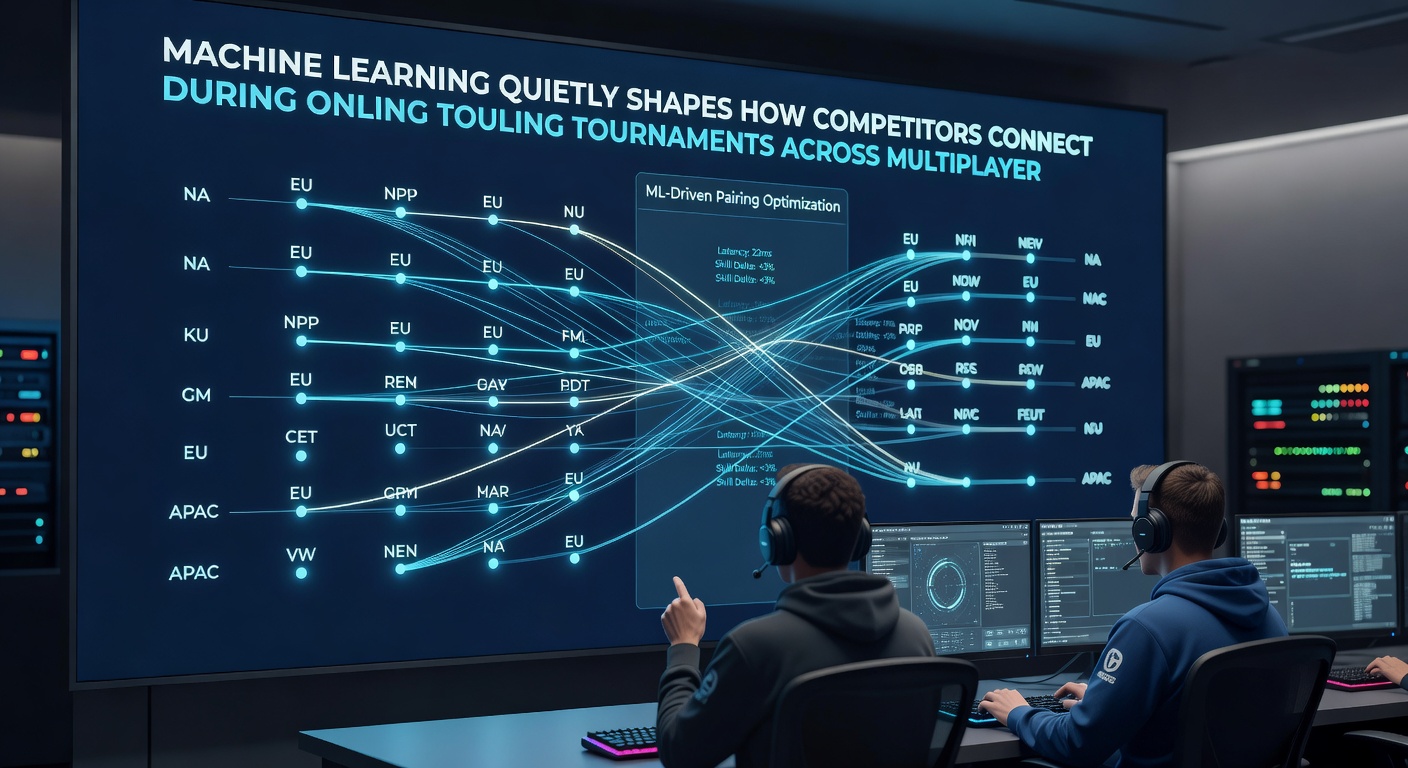
Cloud-based pipelines collect telemetry from client software and feed it into distributed training environments. Feature engineering teams extract relevant signals from raw logs, then pass cleaned variables to neural networks that output compatibility scores for potential pairings. Edge computing nodes at regional data centers handle immediate latency calculations, which keeps response times low even as global player counts surge.
Security protocols encrypt sensitive performance histories while still allowing aggregate analysis for model improvement. Developers test these architectures through simulation environments that replicate tournament-scale loads, ensuring stability before live deployment. Updates occur through phased rollouts, with monitoring dashboards tracking metrics such as average queue duration and post-match satisfaction indicators reported by participants.
Broader Industry Patterns and Research Insights
Academic studies from institutions like Stanford University have examined how similar machine learning techniques scale across different game genres. Their findings highlight the importance of multi-objective optimization, where algorithms balance skill parity against connection quality and queue speed simultaneously. Industry reports from the Entertainment Software Association document rising adoption rates among tournament organizers seeking data-driven approaches to fairness.
Regional differences emerge as well. Asian circuits often emphasize speed of matchmaking due to dense player populations, whereas European events place greater weight on cross-border latency compensation. These variations demonstrate how core machine learning principles adapt to local infrastructure realities without altering fundamental data-processing methods.
Conclusion
Machine learning continues to evolve the infrastructure supporting online tournaments by turning raw performance and network data into actionable pairing decisions. As datasets grow more detailed and models incorporate additional variables, the quiet influence of these systems on competitor connections becomes more pronounced across both casual multiplayer environments and professional esports stages. Ongoing refinements in May 2026 and beyond will likely center on greater personalization while maintaining the transparency required for fair competition.