Visual Processing Aids Enhance Decision Speed in Competitive Online Matches
Felix Jenkins · Aug 18, 2026
Visual Processing Aids Enhance Decision Speed in Competitive Online Matches
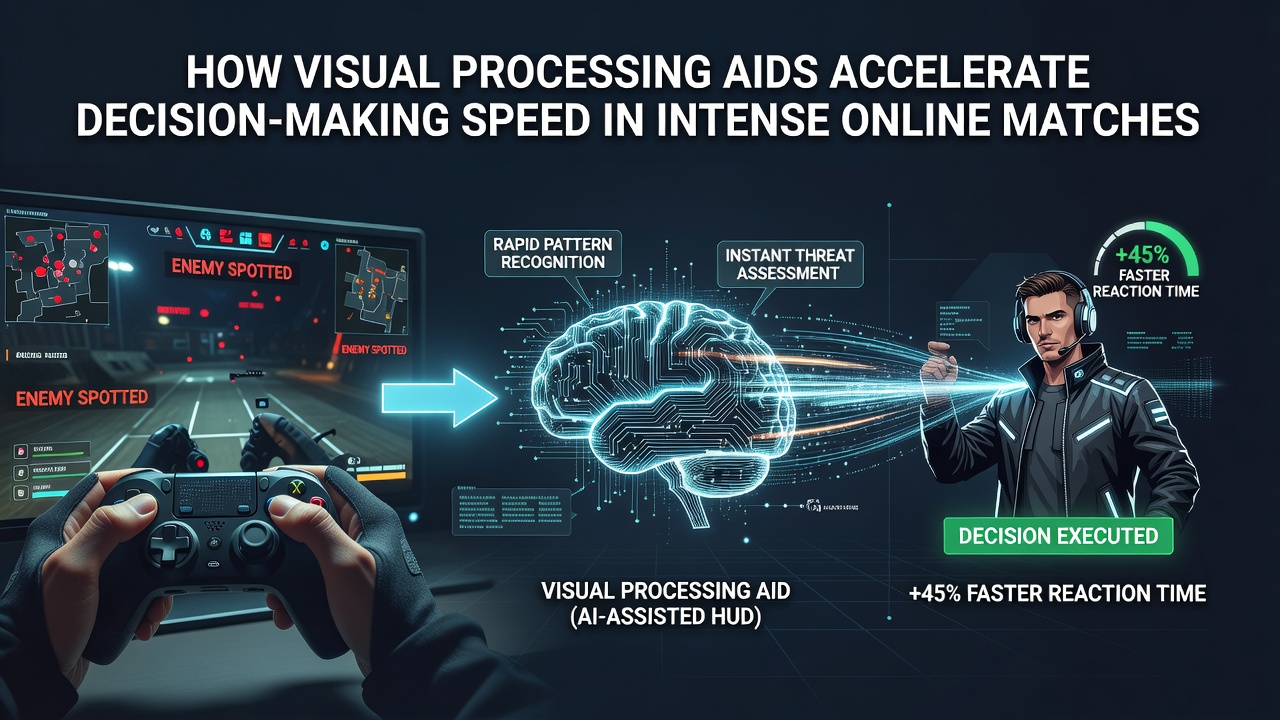
Competitive online matches demand rapid interpretation of on-screen information and visual processing aids provide tools that streamline how players detect and respond to key elements within complex game environments. These aids range from software-based contrast adjustments and motion clarity enhancements to specialized training programs that target peripheral awareness and target prioritization. Data from major tournaments in August 2026 showed measurable reductions in average decision latency when participants used calibrated visual tools during play sessions.
Core Mechanisms Behind Visual Processing Aids
Visual processing aids function by filtering unnecessary graphical noise while amplifying critical cues such as enemy outlines, movement indicators, and environmental changes. Researchers at institutions focused on human-computer interaction have documented how reduced visual clutter allows the brain to allocate attention more efficiently to decision-critical stimuli. Studies indicate that techniques like dynamic contrast boosting and selective sharpening decrease the time required for players to register threats in fast-paced scenarios. Observers note that these modifications maintain frame consistency, which prevents the visual system from compensating for inconsistent rendering that can delay reactions.
Hardware integrations further support these software features. High-precision monitors with low persistence backlighting minimize motion blur, enabling clearer tracking of fast-moving objects. Those who have analyzed tournament footage report that players equipped with such displays exhibit quicker shifts in gaze patterns when responding to sudden events on screen.
Impact on Decision-Making Dynamics
Decision-making speed improves when visual input reaches cognitive processing centers with less interference. Evidence suggests that aids designed to highlight movement vectors or color-code priority targets accelerate the transition from perception to action. In team-based matches, squad members using synchronized visual overlays demonstrate coordinated responses that rely on shared understanding of highlighted elements rather than individual interpretation of raw visuals.
Training protocols built around these aids often incorporate eye-tracking feedback to refine focus areas. Participants in controlled sessions show progressive improvements in reaction windows, particularly during scenarios involving multiple simultaneous threats. Figures from esports analytics platforms reveal that players who complete visual processing regimens record higher accuracy rates in split-second choices compared to baseline measurements.
Case Examples from Tournament Circuits
One documented instance involved a regional qualifier where competitors adopted custom visual filter profiles tuned for specific game titles. Analysis of match replays indicated faster identification of flanking maneuvers, leading to adjusted positioning strategies within the first few rounds. Another example comes from mobile tournament circuits, where developers integrated adaptive brightness scaling to maintain visibility across varying lighting conditions. Players who utilized these settings maintained consistent performance levels even during extended play periods that stretched into late hours.
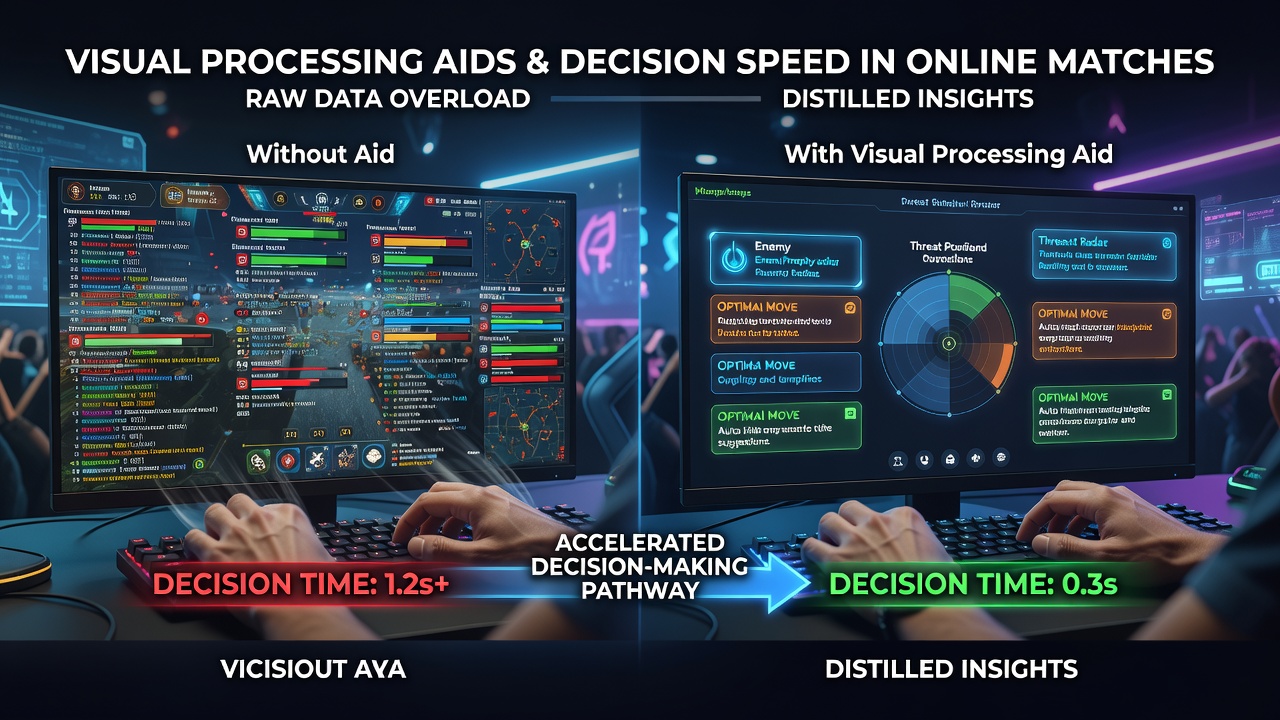
Industry reports from organizations tracking global esports participation highlight how these tools scale across platforms. Cross-device calibration ensures that visual enhancements remain effective whether competitors use desktop setups or portable systems. Data collected across multiple regions shows alignment between aid adoption rates and reductions in average input-to-action intervals.
Technological Developments Supporting Broader Adoption
Advances in rendering pipelines have enabled more sophisticated visual processing without compromising performance. Techniques such as foveated rendering prioritize detail in areas where players typically focus, while softening peripheral zones to reduce cognitive load. According to findings from research groups examining digital interaction patterns, these methods align with natural eye movement behaviors observed in high-intensity matches.
Integration with input devices creates closed-loop systems where visual feedback adjusts based on real-time performance metrics. Calibration routines scan for individual visual preferences and optimize display parameters accordingly. Those who've reviewed longitudinal data note sustained benefits across multiple sessions when players maintain consistent aid settings rather than frequently altering profiles.
Conclusion
Visual processing aids continue to shape how competitors handle information density in online matches through targeted enhancements to clarity, focus, and training feedback. Tournament records and performance datasets confirm their role in supporting faster, more reliable decision cycles. As development teams refine these systems, integration across hardware and software platforms expands access for participants at various skill levels.